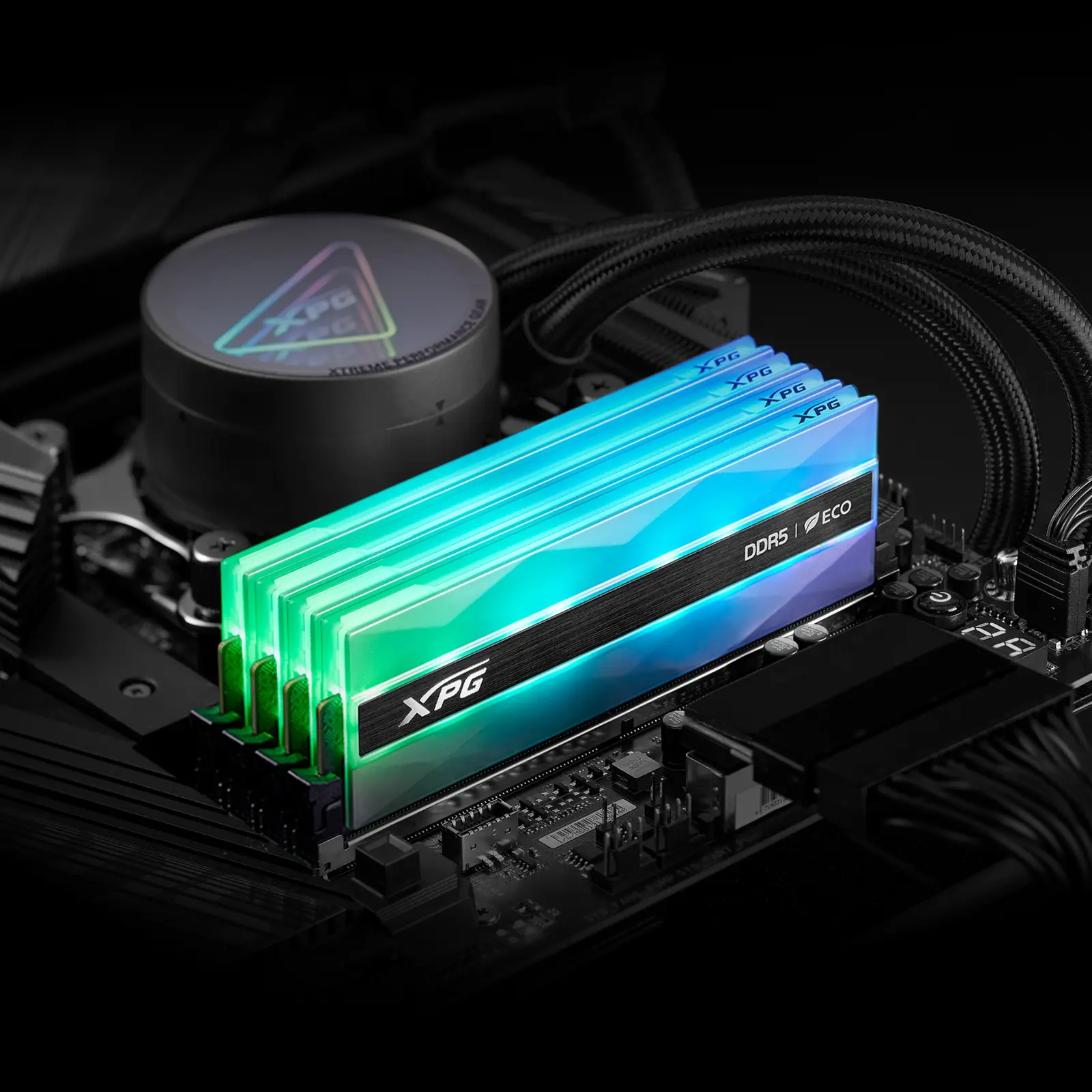










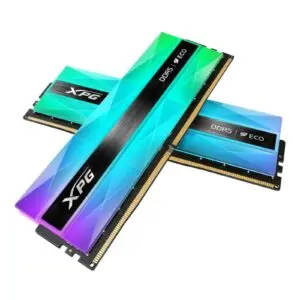
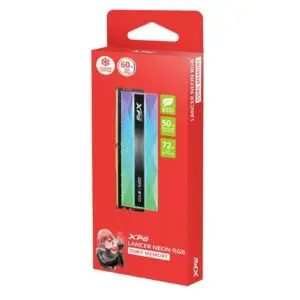
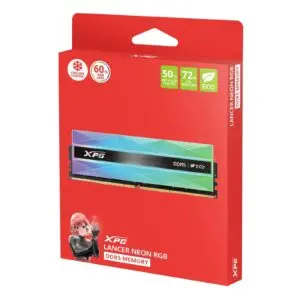
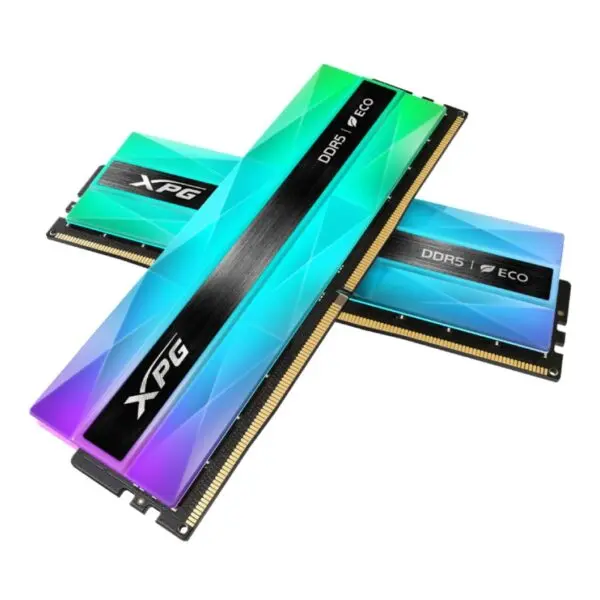
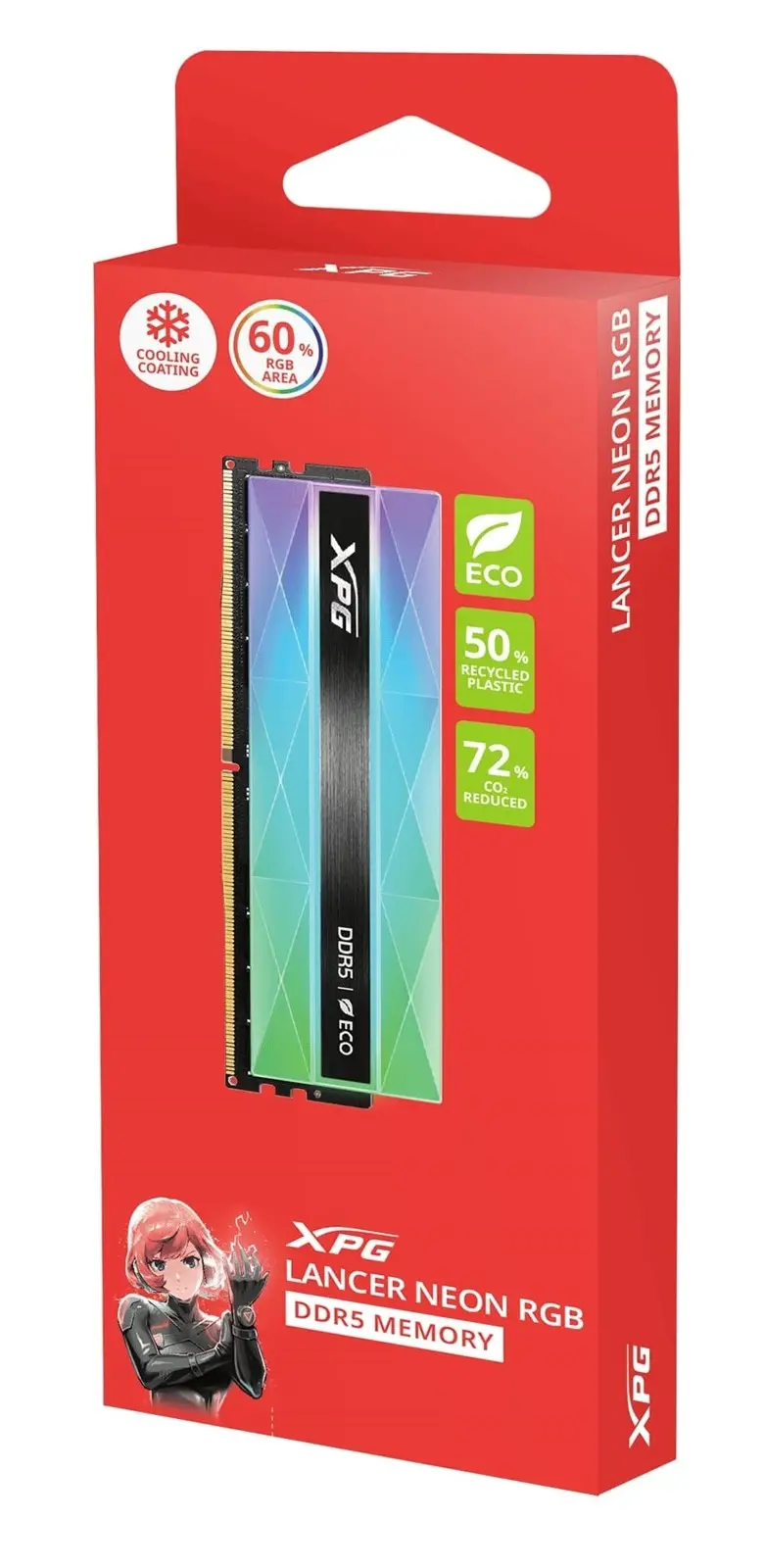
This ADATA XPG Lancer Neon RGB 32GB (2 x 16GB) 6400MHz CL32 DDR5 Memory Kit is built for gamers and overclockers chasing pure speed. It pairs high-frequency DDR5 performance with RGB lighting you can shape to your rig, and it's built around ADATA's eco-friendly design, so you get a fast, good-looking kit without the usual environmental cost.
Specifications
- Capacity: 32GB (2 x 16GB)
- Speed: 6400MHz
- Memory Type: DDR5
- CAS latency: CL32
- Voltage: 1.4V
- XMP Ready: Supports Intel XMP 3.0
- Pin Count: 288-Pin
- ECC: Non-ECC
- Platform optimisation: Support for AMD EXPO and compatibility with the latest platforms
Intel XMP 3.0 and AMD EXPO support
One-click profiles take the kit straight to its rated speed without wrestling with BIOS timings yourself. XMP 3.0 covers Intel systems, while AMD EXPO support means Ryzen builds get the same easy overclocking. Either way, you get the performance you paid for without the usual trial and error, and the kit is ready for current platforms from either camp.
High-quality memory chips and 10-layer PCB
Underneath the heatsink, premium chips and a 10-layer PCB let this kit run fast and stay stable while doing it. That matters once you start pushing frequencies for gaming or heavier workloads, where clock speed and transmission need to hold steady together. It's built to hit its rated speed and keep it there.
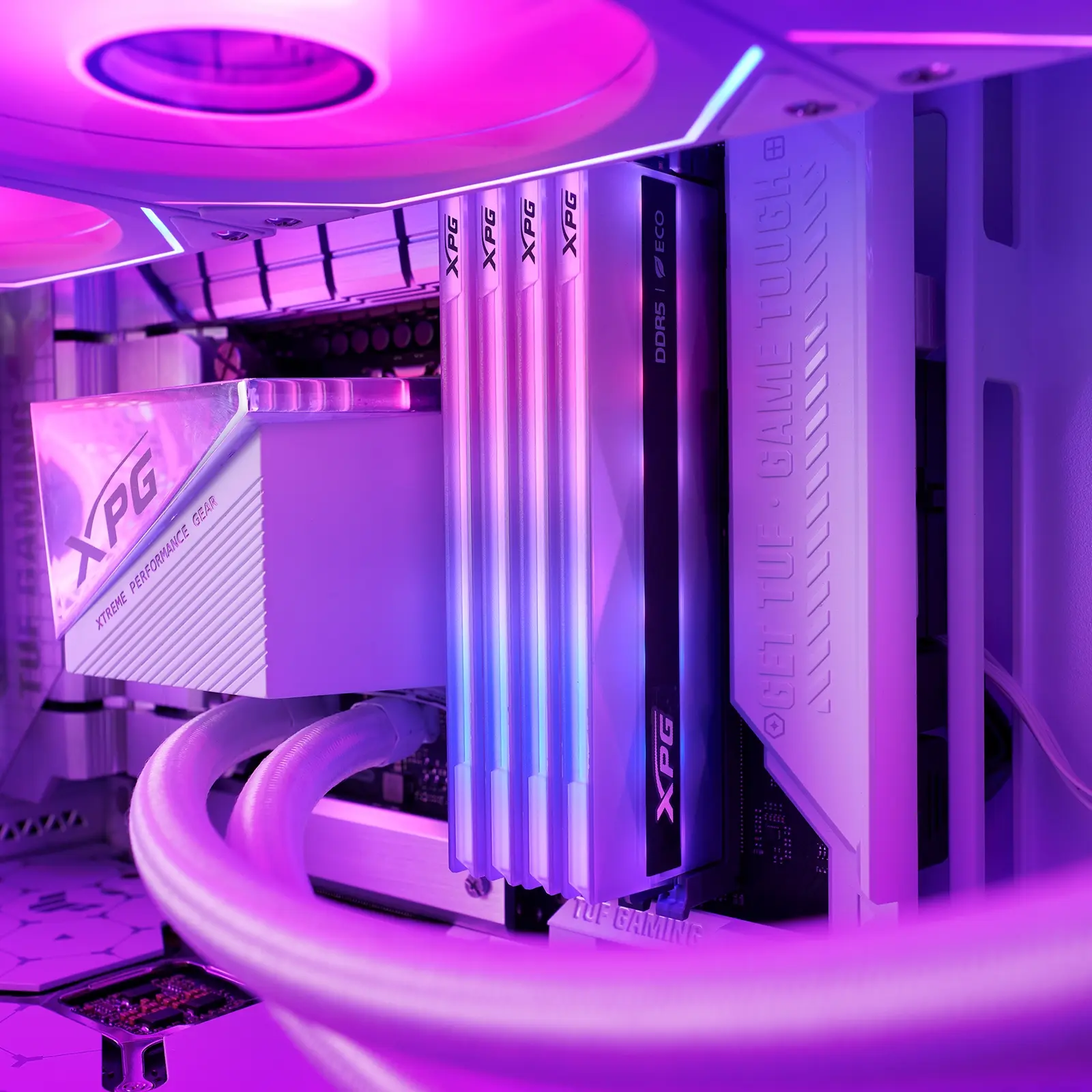
60% RGB surface illumination with XPG Prime software
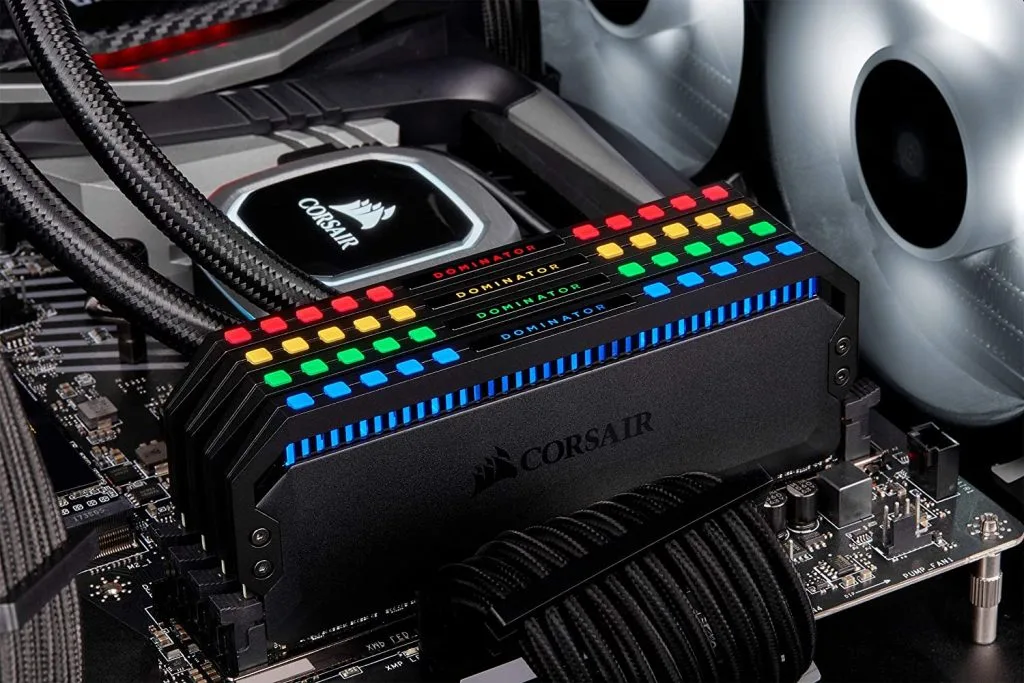
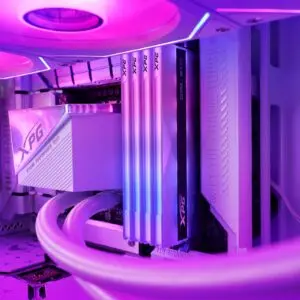
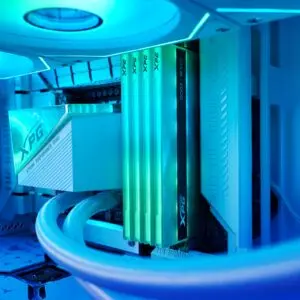
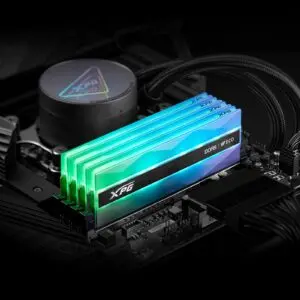
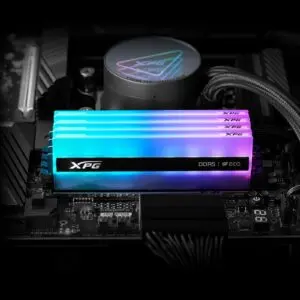
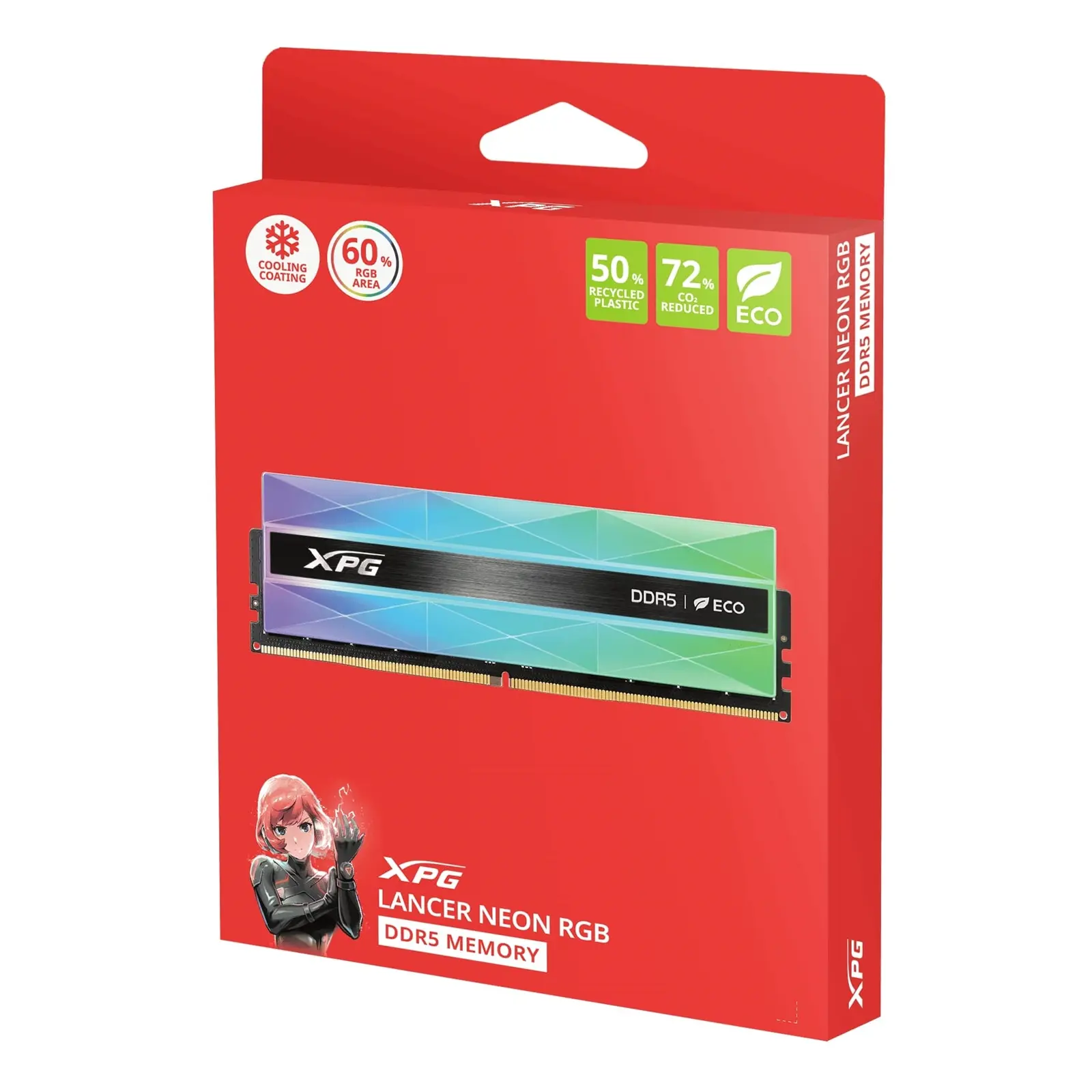
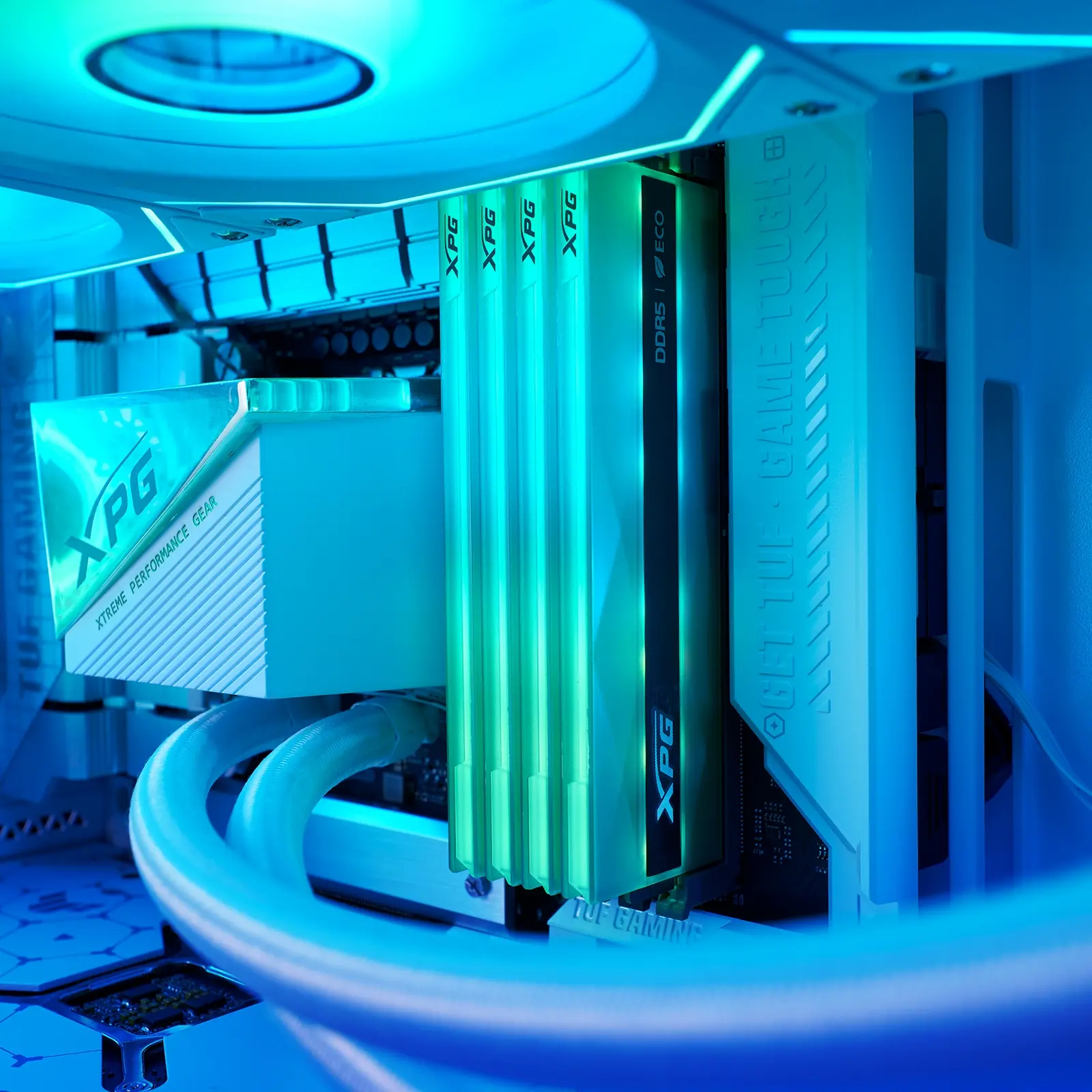
Extensive RGB coverage across the top of each module means the lighting actually shows once it's in your case, not just a sliver at the edge. XPG Prime software lets you choose static, breathing or comet effects, sync lighting to your music, or match it with other Prime-supported XPG gear for a consistent look across your build. It's lighting you control, not just lighting that's there.
Eco-friendly heatsink and heat dissipating coating
The heatsink is made from 50% PCR plastic and FSC-certified packaging, cutting carbon emissions significantly without asking you to trade away looks or performance. An eco-friendly IMR process also gives each module its own heatsink pattern, so it stands out rather than looking like every other kit on the shelf. A heat dissipating coating on top helps keep temperatures down, so the kit holds its stability as speeds climb.